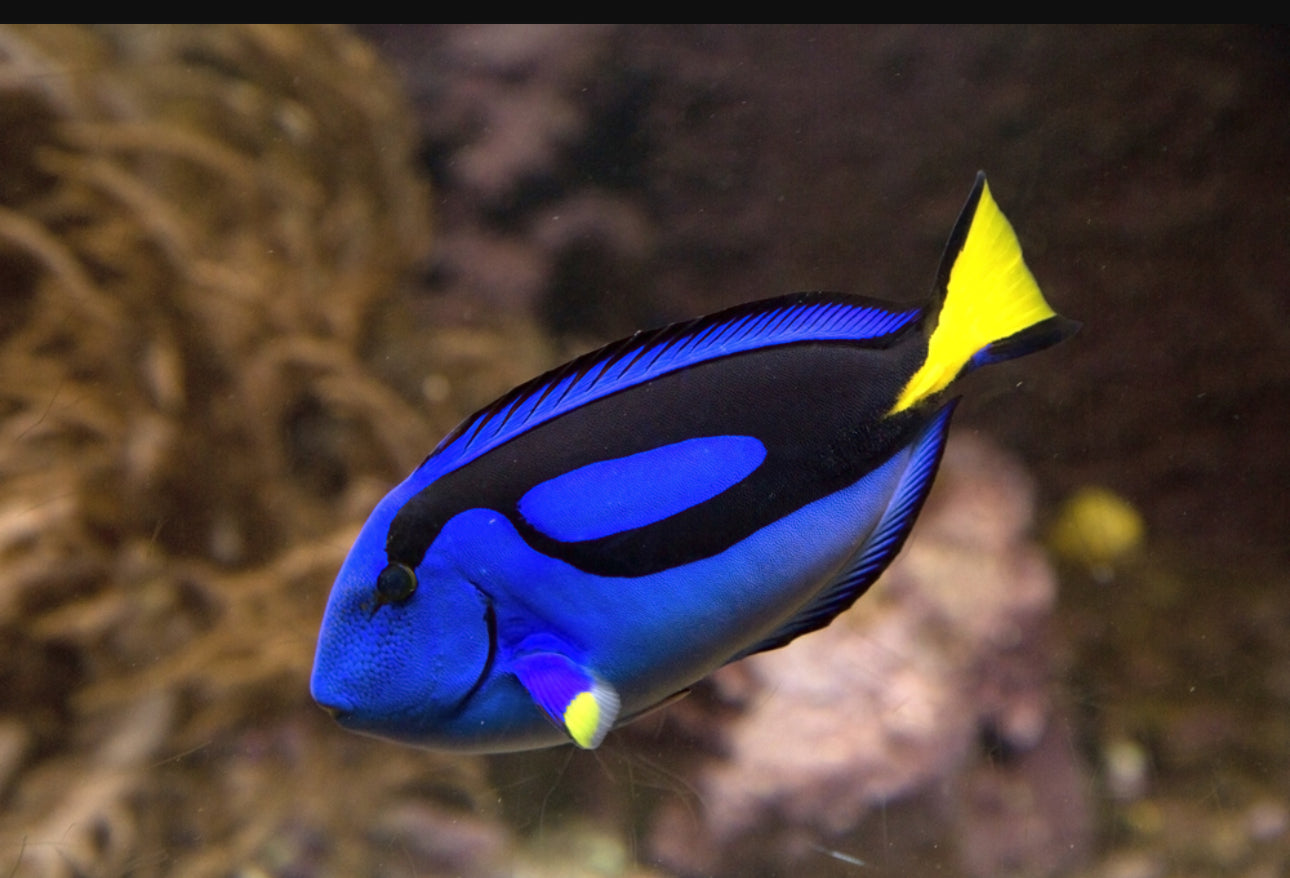
Blue Tang
Blue Tang
About the Blue Tang
The Blue Tang (Paracanthurus hepatus), also known as the Regal Tang or Palette Surgeonfish, is one of the most recognizable and beloved fish in the marine aquarium hobby. Made famous as "Dory" from Finding Nemo, this stunning species features a vibrant royal blue body with bold black markings and a bright yellow tail. While beautiful and charismatic, Blue Tangs require proper care and tank size to thrive long-term.
Why Reef Keepers Love This Fish
- Iconic Appearance: Brilliant royal blue coloration with distinctive black "palette" markings and yellow tail
- Active Swimmer: Constantly on the move, bringing energy and motion throughout the aquarium
- Personality: Curious, interactive, and often becomes a favorite among aquarists
- Algae Control: Excellent grazer that helps control nuisance algae on rocks and glass
- Reef-Safe: Won't harm corals or invertebrates, making it ideal for mixed reef tanks
- Social Behavior: Can be kept in groups if introduced simultaneously in large systems
Care Requirements
Experience Level: Intermediate to Advanced
Temperament: Semi-aggressive (can be territorial with other tangs)
Minimum Tank Size: 125 gallons (180+ gallons recommended for adult size)
Diet: Omnivore with herbivore preference—requires frequent feedings of marine algae, nori, spirulina, mysis shrimp, and herbivore pellets. Feed 2-3 times daily.
Max Size: 12 inches
Ideal Water Parameters
Temperature: 72-78°F
pH: 8.1-8.4
Salinity: 1.023-1.025 SG
Ammonia/Nitrite: 0 ppm
Nitrate: <10 ppm (tangs are sensitive to poor water quality)
Important Considerations
Tank Size Matters: Blue Tangs are active, fast-growing fish that reach 12 inches in captivity. While juveniles can temporarily live in smaller tanks, a 125-gallon aquarium is the minimum for long-term health, with 180+ gallons being ideal. Insufficient swimming space leads to stress, stunted growth, and health issues.
Disease Susceptibility: Blue Tangs are particularly prone to marine ich (Cryptocaryon irritans) and marine velvet (Amyloodinium), especially when stressed. Quarantine new arrivals, maintain excellent water quality, provide a varied diet, and minimize stress to prevent outbreaks. Many experienced aquarists recommend a quarantine period before adding to the display tank.
Feeding Requirements: These fish require frequent feedings throughout the day with a diet rich in marine algae. Provide nori sheets on a clip and ensure constant access to grazing opportunities on live rock. A well-fed Blue Tang is healthier, more colorful, and less aggressive.
Acclimation: Take extra care during acclimation. Drip acclimation over 60+ minutes is strongly recommended. Blue Tangs are sensitive to changes in water chemistry and salinity.
What to Expect
Your Blue Tang will arrive healthy but may be shy or stressed initially—this is normal. Provide plenty of live rock for grazing and hiding spots during the adjustment period. Dim the lights for the first 24 hours to reduce stress. Once established, they become bold, active swimmers that patrol the entire aquarium. Their vibrant coloration intensifies under quality reef lighting, and they often develop endearing personalities, swimming to the front of the tank when you approach. With proper care, tank size, and attention to their needs, Blue Tangs are rewarding long-term additions to large reef systems.
Product features
Product features
Materials and care
Materials and care
Merchandising tips
Merchandising tips
Share