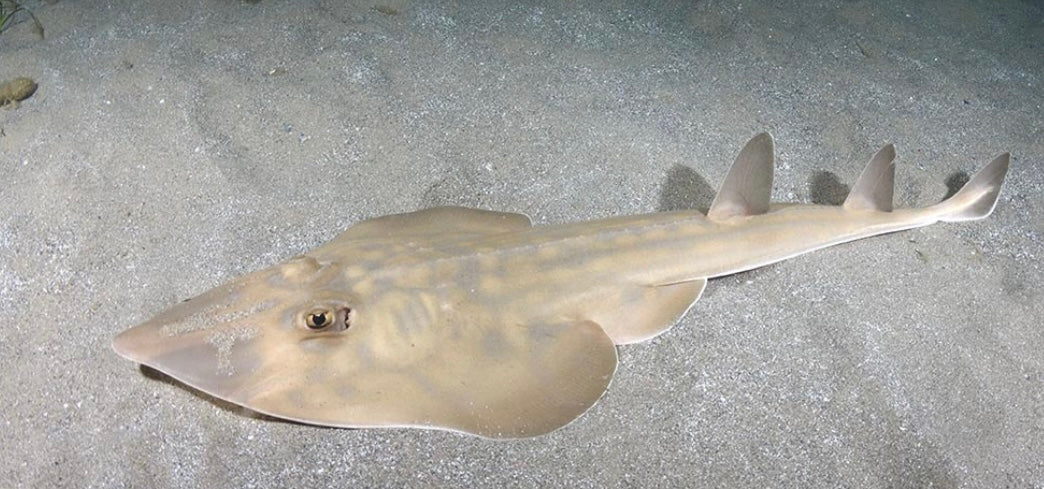
Guitar fish
Guitar fish
Guitar Fish - A Unique Ray-Shark Hybrid Appearance
The Guitar Fish (Rhinobatos species), also known as the Guitarfish or Shovelnose Ray, is a fascinating and distinctive species that bridges the gap between sharks and rays. With its unique guitar-shaped body—featuring a flattened, ray-like front end that transitions to a shark-like tail—this prehistoric-looking creature brings extraordinary visual interest to very large, specialized aquarium systems. Guitar Fish are captivating bottom-dwellers that offer a rare opportunity to observe the behavior of these unique elasmobranchs in a home aquarium setting.
Key Features:
- Unique Appearance: Distinctive guitar or shovel-shaped body that's part ray, part shark
- Prehistoric Charm: Ancient lineage dating back millions of years
- Bottom-Dwelling Behavior: Spends most time resting on or partially buried in sand substrate
- Peaceful Temperament: Generally peaceful but will consume fish and invertebrates that fit in its mouth
- Hardy Once Established: Tolerant of varying conditions once properly acclimated
- Long-Lived: Can live 10-15+ years with proper care
Critical Care Requirements:
Tank Size: MINIMUM 300 gallons; 500+ gallons strongly recommended for adult specimens
Experience Level: EXPERT ONLY - This species is not suitable for beginners or intermediate aquarists
Diet: Carnivore - requires whole fish, squid, shrimp, clams, and other meaty seafood
Temperament: Generally peaceful but predatory toward small fish and invertebrates
Reef Compatibility: NOT reef safe - predatory toward fish and all invertebrates
Adult Size: 3-5 feet in length depending on species
Growth Rate: Moderate - juveniles will outgrow smaller systems within 1-2 years
Distinctive Appearance:
The Guitar Fish has a truly unique body shape that makes it instantly recognizable:
- Flattened, triangular head and body resembling a guitar or shovel
- Ray-like pectoral fins that merge with the head
- Shark-like tail with two dorsal fins and a well-developed caudal fin
- Brown to gray coloration with lighter undersides
- Smooth skin (unlike rough shark skin)
- Small eyes positioned on top of the head
- Mouth located on the underside for bottom feeding
Tank Requirements:
Massive Filtration: Requires heavy-duty biological, mechanical, and chemical filtration to handle the bioload of a large predator. Protein skimming is essential, and oversized filtration is strongly recommended.
Deep Sand Substrate: MANDATORY - Guitar Fish need a deep sand bed (4-6 inches minimum) of fine sand. They spend much of their time resting on or partially buried in the sand, and this is essential for their natural behavior and stress reduction.
Open Bottom Space: Provide substantial open sand areas for the guitar fish to rest and bury. Minimal rockwork is preferred to maximize usable bottom space.
Secure Cover: A completely secure lid or cover is mandatory - guitar fish can be startled and may thrash or jump.
Water Quality: Pristine water conditions are critical. Regular large water changes (20-30% weekly) and consistent parameters are essential for long-term health. Guitar fish are sensitive to poor water quality and elevated nitrates.
Feeding & Nutrition:
Guitar Fish are bottom-feeding predators that hunt for buried prey in the wild. In captivity, offer a varied diet including:
- Whole fish (silversides, mackerel, sardines)
- Squid and cuttlefish
- Large shrimp (fresh or frozen)
- Clams, mussels, and scallops
- Crayfish and crabs
- Marine worms (if available)
Feed 2-3 times per week, adjusting portions based on the guitar fish's size and body condition. They locate food using electroreception and smell, so dropping food near them on the sand works well. Avoid overfeeding, which can lead to water quality issues in even the largest systems.
Behavior & Activity:
Guitar Fish are primarily nocturnal or crepuscular (most active at dawn and dusk). During the day, they often rest on the sand, sometimes partially burying themselves with gentle undulating movements of their pectoral fins. At night, they become more active, patrolling the bottom in search of food. They swim using a combination of ray-like pectoral fin undulation and shark-like tail propulsion, creating a unique and fascinating swimming style.
Burying Behavior:
One of the most interesting behaviors of guitar fish is their ability to partially bury themselves in the sand. Using gentle undulating movements of their pectoral fins, they create a shallow depression and settle in, leaving only their eyes and spiracles (breathing openings) exposed. This behavior is natural and helps them feel secure, ambush prey, and rest. A deep, fine sand bed is essential to allow this behavior.
Compatibility:
Tank Mates: Only large, fast-swimming fish that are too large to be consumed. Suitable tank mates might include large groupers, snappers, or other predatory fish of similar size. Avoid all small fish, slow-moving species, and all invertebrates (which are natural prey).
Multiple Guitar Fish: Can potentially be kept with other guitar fish or ray species in extremely large systems (800+ gallons), but careful monitoring is required to ensure adequate space and resources.
Tank Size - Critical Consideration:
Guitar Fish require very large aquariums. While juveniles (12-18 inches) can temporarily be housed in 200-300 gallon tanks, adults need a minimum of 300 gallons, with 500+ gallons being ideal for long-term housing. The tank should be significantly longer and wider than the fish's adult length to allow for turning and movement. These are active swimmers that need substantial bottom space.
Before purchasing a Guitar Fish, ensure you have the tank size to accommodate this animal for its entire lifespan, which can be 10-15+ years with proper care.
Acclimation & Sensitivity:
Guitar Fish can be sensitive during acclimation and shipping. Use a slow drip acclimation method over 2-3 hours. They may be stressed initially and refuse food for several days. Maintain excellent water quality and minimize disturbances during the acclimation period. Once established and eating regularly, they're generally hardy.
Legal & Ethical Considerations:
Permits: Check local and state regulations - some jurisdictions require permits or prohibit keeping rays and shark-like species in home aquariums.
Long-Term Commitment: Guitar Fish can live 10-15+ years and will require substantial housing for their entire lifespan. Ensure you have a plan for the fish's entire life, including potential relocation to public aquariums if it outgrows your system or if circumstances change.
Responsible Ownership: Only purchase this species if you can provide appropriate housing, filtration, and care for its entire life. Impulse purchases of large predatory species often result in poor outcomes for the animal.
Important Notes:
- This species is NOT suitable for standard home aquariums
- Requires specialized equipment, massive water volume, and expert-level husbandry
- Deep sand substrate (4-6 inches) is mandatory for natural behavior
- Will outgrow most home aquarium systems as it matures
- Ongoing costs for food, electricity, and maintenance are substantial
- Have a contingency plan for rehoming if necessary
- Will consume all invertebrates and small fish
- Sensitive to poor water quality and elevated nitrates
Why Choose a Guitar Fish?
Despite the challenges, Guitar Fish offer unique rewards for qualified aquarists:
- Extraordinary appearance that's unlike any other aquarium species
- Fascinating burying and bottom-dwelling behavior
- Unique swimming style combining ray and shark characteristics
- Opportunity to observe a rare and prehistoric species
- Generally peaceful temperament for a large predator
- Long lifespan allows for years of enjoyment
Our Guitar Fish are carefully selected, quarantined, and feeding well before shipment. Each fish is backed by our live arrival guarantee. Due to the specialized nature of this species, we strongly encourage you to contact us before purchase to discuss your system specifications and ensure this species is appropriate for your setup. We're committed to responsible placement and will only sell to aquarists with appropriate facilities and experience. NOT INCLUDED IN FREE SHIPPING.
Product features
Product features
Materials and care
Materials and care
Merchandising tips
Merchandising tips
Share