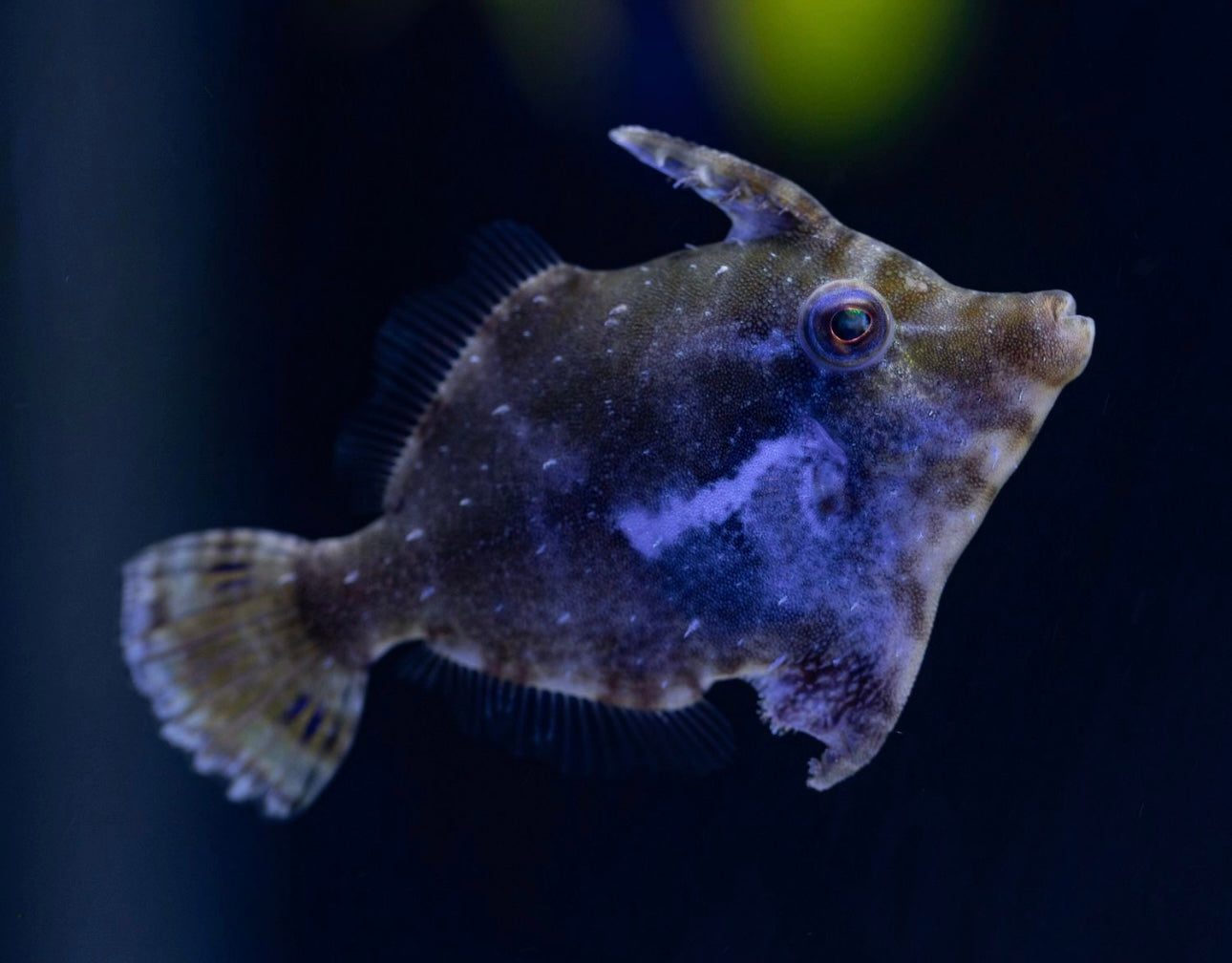
Aiptasia Eating Filefish
Aiptasia Eating Filefish
**Aiptasia Eating Filefish: The Natural Reef Cleaner**
The Aiptasia Eating Filefish (Acreichthys tomentosus) is a remarkable addition to any reef aquarium, revered for its unique ability to control the invasive Aiptasia anemones that can plague reef systems. With its intriguing appearance and essential role in maintaining a balanced ecosystem, this filefish is a must-have for serious reef hobbyists looking to enhance their tank's health and beauty.
**Why Choose the Aiptasia Eating Filefish?**
- **Natural Aiptasia Control:** Known for its penchant for consuming Aiptasia anemones, this filefish provides a natural solution to a common reef problem, helping to keep your aquarium looking pristine.
- **Distinctive Appearance:** Sporting a mottled pattern and elongated body, the Aiptasia Eating Filefish brings a touch of the exotic to your underwater world.
- **Active and Engaging:** Their curious nature and active foraging behavior make them a captivating presence in any tank.
**Care Requirements**
- **Water Parameters:** Maintain optimal water conditions with a temperature range of 72-78°F, pH between 8.1-8.4, and salinity between 1.020-1.025.
- **Tank Size:** A minimum tank size of 30 gallons is recommended to provide ample space for swimming and foraging.
- **Feeding:** While they primarily feed on Aiptasia, supplement their diet with a variety of frozen foods, such as brine shrimp and mysis shrimp, to ensure balanced nutrition.
**Compatibility and Considerations**
- **Reef Tank Suitability:** Generally considered reef-safe, although caution is advised as they may occasionally nip at coral polyps or other invertebrates.
- **Peaceful Coexistence:** Compatible with a wide range of tank mates, the Aiptasia Eating Filefish is typically peaceful and can coexist with other non-aggressive marine species.
Embrace the dual benefits of aesthetic appeal and ecological balance with the Aiptasia Eating Filefish. Its ability to naturally manage Aiptasia outbreaks while cohabitating harmoniously with other reef inhabitants makes it an invaluable asset to any saltwater enthusiast's collection. Enhance your reef aquarium today and witness the transformative impact of this dedicated and fascinating species!
Feeding & Diet
Feeding & Diet
An opportunistic omnivore, the Seahorse will scavenge detritus, uneaten food, and algae — making it a natural cleanup crew member. Supplement with small meaty foods like mysis shrimp or pellets 2–3x per week if natural food sources are limited.
Care & Water Parameters
Care & Water Parameters
The Seahorse thrives in stable, well-maintained reef conditions. Target parameters: temperature 72–78°F, salinity 1.025–1.026 SG, pH 8.1–8.4, and alkalinity 8–12 dKH. A mature, established tank of at least 20 gallons is recommended.
Reef & Tank Compatibility
Reef & Tank Compatibility
Generally considered reef-safe. The Seahorse coexists well with most corals and peaceful fish. Use caution with very small invertebrates or slow-moving tankmates. Provide ample rockwork and hiding spots to reduce territorial behavior.
Size & Growth
Size & Growth
Seahorses are typically shipped at 0.5–1.5 inches. They are slow-growing and generally remain small, making them well-suited for nano and mid-size reef systems.
Shipping & Live Arrival Guarantee
Shipping & Live Arrival Guarantee
All livestock ships with heat or cold packs as needed and is packaged for safe transit. We stand behind a live arrival guarantee — if your animal arrives DOA, contact us within 2 hours of delivery with a clear photo. See our full DOA policy for claim details.
Share