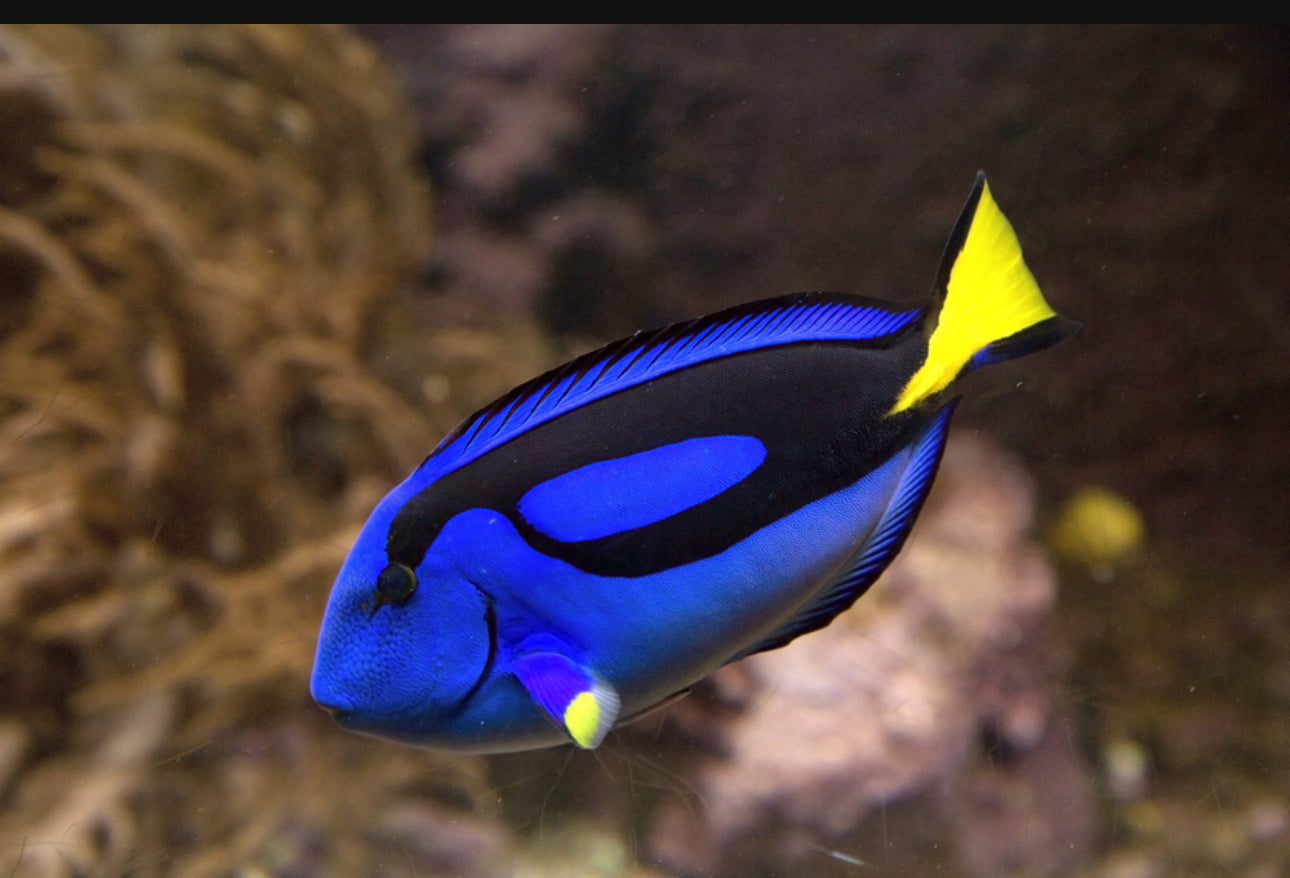
Blue Hepatus Lg Tang
Blue Hepatus Lg Tang
Blue Hepatus Lg Tang: The Jewel of the Reef
The Blue Hepatus Tang (Paracanthurus hepatus), also affectionately known as the Blue Tang or Palette Surgeonfish, is a vibrant addition that brings a burst of electric blue and contrasting black patterns to your reef aquarium. This striking tang is not only famous for its beauty but also for its active and social nature, making it a favorite among reef enthusiasts.
Care Requirements & Tank Setup
Care Level: Moderate
Temperament: Semi-aggressive
Minimum Tank Size: 180+ gallons
Diet: Herbivore - primarily seaweed and algae, supplemented with high-quality tang pellets and frozen foods
Reef Safe: Yes
The Blue Hepatus Tang thrives in stable tank conditions with optimal water parameters: a temperature of 72-78°F, pH levels between 8.1-8.4, and salinity of 1.020-1.025. A spacious environment with plenty of swimming room and hiding spots is essential to accommodate their active lifestyle and reduce stress.
Compatibility & Social Behavior
Known for their dynamic presence, Blue Hepatus Tangs are generally peaceful with most reef inhabitants, making them a compatible choice for mixed-species tanks. However, they can exhibit territorial behavior towards other tangs, particularly those with a similar body shape. To minimize aggression, it's advisable to avoid housing them with other Acanthuridae unless in very large systems.
Benefits to Your Reef System
Beyond their aesthetic appeal, Blue Hepatus Tangs contribute to the health of your reef by grazing on algae, helping to maintain a balanced ecosystem. Their presence can encourage natural behaviors in other fish, promoting a vibrant and active tank environment.
Incorporating a Blue Hepatus Tang into your aquarium is not just about adding a dash of color—it's about enhancing the dynamic balance and vitality of your reef. With proper care and attention, this magnificent tang will be a captivating centerpiece and a cherished member of your aquatic community.
Feeding & Diet
Feeding & Diet
An opportunistic omnivore, the Seahorse will scavenge detritus, uneaten food, and algae — making it a natural cleanup crew member. Supplement with small meaty foods like mysis shrimp or pellets 2–3x per week if natural food sources are limited.
Care & Water Parameters
Care & Water Parameters
The Seahorse thrives in stable, well-maintained reef conditions. Target parameters: temperature 72–78°F, salinity 1.025–1.026 SG, pH 8.1–8.4, and alkalinity 8–12 dKH. A mature, established tank of at least 20 gallons is recommended.
Reef & Tank Compatibility
Reef & Tank Compatibility
Generally considered reef-safe. The Seahorse coexists well with most corals and peaceful fish. Use caution with very small invertebrates or slow-moving tankmates. Provide ample rockwork and hiding spots to reduce territorial behavior.
Size & Growth
Size & Growth
Seahorses are typically shipped at 0.5–1.5 inches. They are slow-growing and generally remain small, making them well-suited for nano and mid-size reef systems.
Shipping & Live Arrival Guarantee
Shipping & Live Arrival Guarantee
All livestock ships with heat or cold packs as needed and is packaged for safe transit. We stand behind a live arrival guarantee — if your animal arrives DOA, contact us within 2 hours of delivery with a clear photo. See our full DOA policy for claim details.
Share