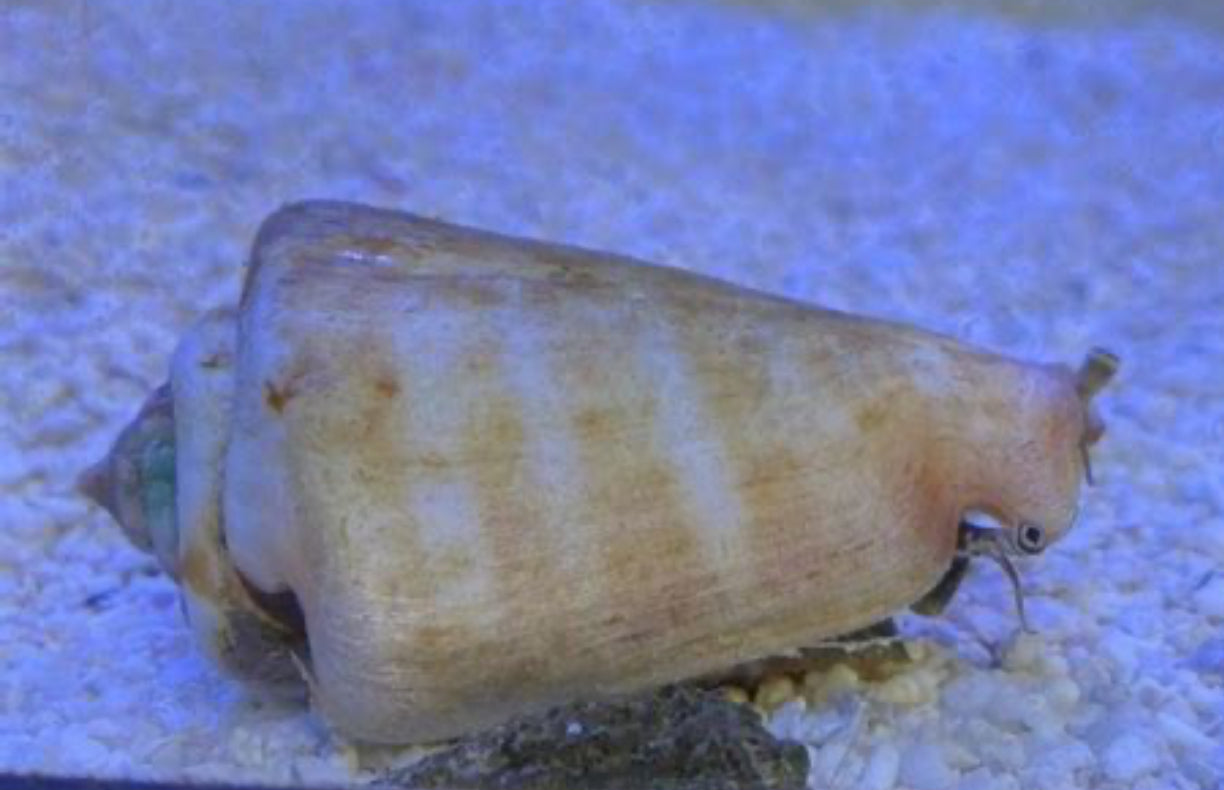
Sand Tiger Conch Snail
Sand Tiger Conch Snail
Sand Tiger Conch (Strombus sp.)
Sand tiger conchs are highly efficient sand-sifting members of the clean-up crew, featuring attractive shells with distinctive patterns and coloration. These active scavengers are essential for maintaining a healthy sand bed in reef aquariums.
Key Benefits:
Excellent sand bed cleaners that constantly sift and aerate substrate
Consume detritus, uneaten food, and algae
Help prevent anaerobic pockets in the sand bed
Peaceful and reef safe
Interesting to watch as they move across the aquarium
Care Requirements:
Temperature: 72-78°F
Salinity: 1.023-1.025 specific gravity
Diet: Omnivorous - feeds on detritus, algae, and leftover food; may require supplemental feeding with algae wafers or pellets in established tanks
Substrate: Requires a sand bed of at least 2-3 inches deep for natural behavior
Reef Safe: Yes, completely safe with corals and other invertebrates
Acclimation: Drip acclimate for 45-60 minutes
Important Notes:
Sand tiger conchs are active during the day and will continuously plow through your sand bed. Ensure your tank has adequate sand depth and surface area for them to forage. They may occasionally knock over small frags or unsecured items while moving. These conchs are excellent for preventing detritus buildup but should not be the sole CUC member.
Recommended Stocking: 1 per 20-30 gallons of sand bed area
Feeding & Diet
Feeding & Diet
An opportunistic omnivore, the Seahorse will scavenge detritus, uneaten food, and algae — making it a natural cleanup crew member. Supplement with small meaty foods like mysis shrimp or pellets 2–3x per week if natural food sources are limited.
Care & Water Parameters
Care & Water Parameters
The Seahorse thrives in stable, well-maintained reef conditions. Target parameters: temperature 72–78°F, salinity 1.025–1.026 SG, pH 8.1–8.4, and alkalinity 8–12 dKH. A mature, established tank of at least 20 gallons is recommended.
Reef & Tank Compatibility
Reef & Tank Compatibility
Generally considered reef-safe. The Seahorse coexists well with most corals and peaceful fish. Use caution with very small invertebrates or slow-moving tankmates. Provide ample rockwork and hiding spots to reduce territorial behavior.
Size & Growth
Size & Growth
Seahorses are typically shipped at 0.5–1.5 inches. They are slow-growing and generally remain small, making them well-suited for nano and mid-size reef systems.
Shipping & Live Arrival Guarantee
Shipping & Live Arrival Guarantee
All livestock ships with heat or cold packs as needed and is packaged for safe transit. We stand behind a live arrival guarantee — if your animal arrives DOA, contact us within 2 hours of delivery with a clear photo. See our full DOA policy for claim details.
Share