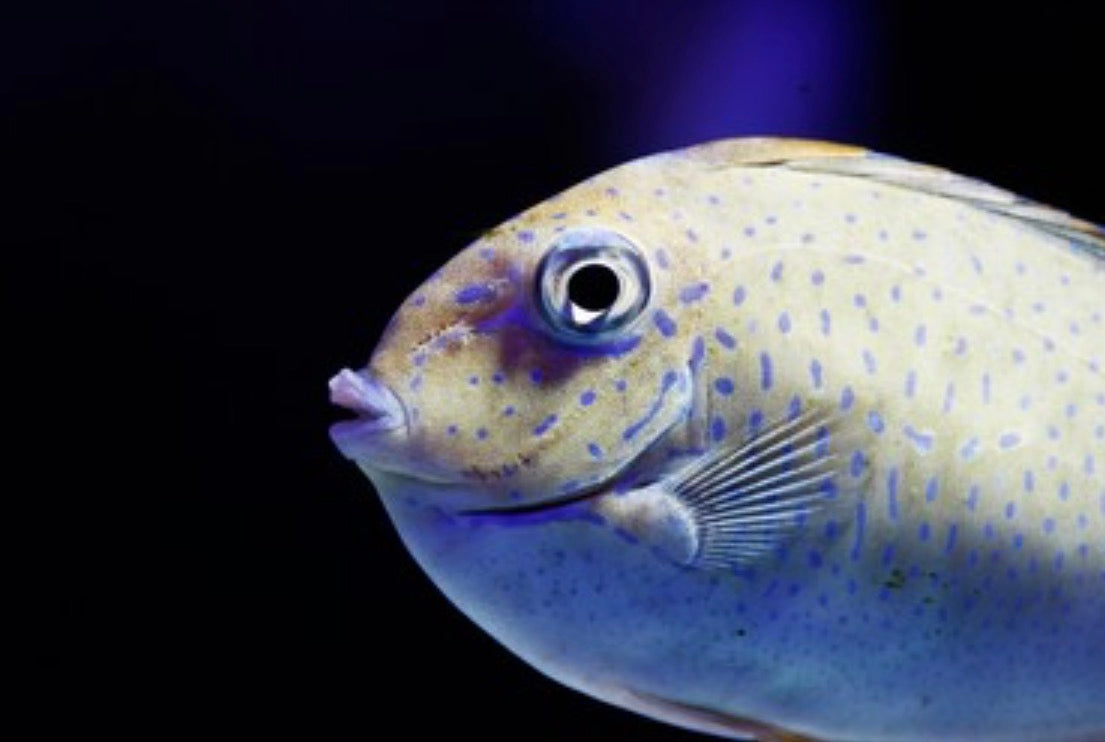
Unicorn Spotted Tang
Unicorn Spotted Tang
Couldn't load pickup availability
**Unicorn Spotted Tang: The Majestic Marvel of Your Reef Aquarium**
The Unicorn Spotted Tang (Naso unicornis) is a breathtaking and enchanting addition to any marine enthusiast’s reef aquarium. Known for its distinctive horn-like protrusion on the forehead and beautifully spotted body, this tang offers a unique blend of elegance and intrigue that captivates the eye and complements your underwater paradise.
**Why Choose the Unicorn Spotted Tang?**
The Unicorn Spotted Tang is not just a visual delight but a harmonious member of the reef community. Its peaceful demeanor makes it an ideal candidate for mixed-species tanks, where it gracefully coexists with other reef inhabitants. With its gentle yet curious nature, this tang will glide through your aquarium with poise, adding a touch of majesty to your aquatic environment.
**Care & Requirements**
To ensure the health and happiness of your Unicorn Spotted Tang, a spacious tank is essential. A minimum of 180 gallons is recommended to accommodate its active swimming habits and potential size of up to 24 inches. Maintaining stable water parameters is crucial, with temperatures between 72-78°F, a pH level of 8.1-8.4, and a specific gravity of 1.020-1.025.
**Diet & Feeding**
The Unicorn Spotted Tang thrives on a varied diet rich in marine-based algae and seaweed, supplemented with high-quality flake or pellet foods. Regular feeding of spirulina and nori will not only enhance its vibrant coloration but also support its overall well-being.
**Reef Compatibility**
Unicorn Spotted Tangs are highly compatible with reef tanks, posing no threat to corals or invertebrates. Their peaceful nature allows them to coexist with a wide variety of fish, making them a versatile choice for diverse marine setups.
Invite the majestic presence of the Unicorn Spotted Tang into your reef aquarium and watch as it transforms your underwater world into a realm of beauty and serenity. This magnificent tang promises to be a cornerstone of your aquatic community, offering endless fascination and grace.
Feeding & Diet
Feeding & Diet
Herbivore. Nori, spirulina pellets, algae; some meaty foods.
Care & Water Parameters
Care & Water Parameters
Temperature 75-80°F, salinity 1.023-1.025 SG, pH 8.1-8.4, ammonia and nitrite 0, nitrate under 20 ppm. Long tank, strong flow, high oxygen.
Reef & Tank Compatibility
Reef & Tank Compatibility
Reef safe. Tangs are territorial with other tangs. Min tank: 75-180 gal depending on species.
Size & Growth
Size & Growth
Up to 6-15 in.
Shipping & Live Arrival Guarantee
Shipping & Live Arrival Guarantee
All livestock ships with heat or cold packs as needed and is packaged for safe transit. We stand behind a live arrival guarantee — if your animal arrives DOA, contact us within 2 hours of delivery with a clear photo. See our full DOA policy for claim details.
Share